
Garlic
Superstition Advent Calendar Day Eleven

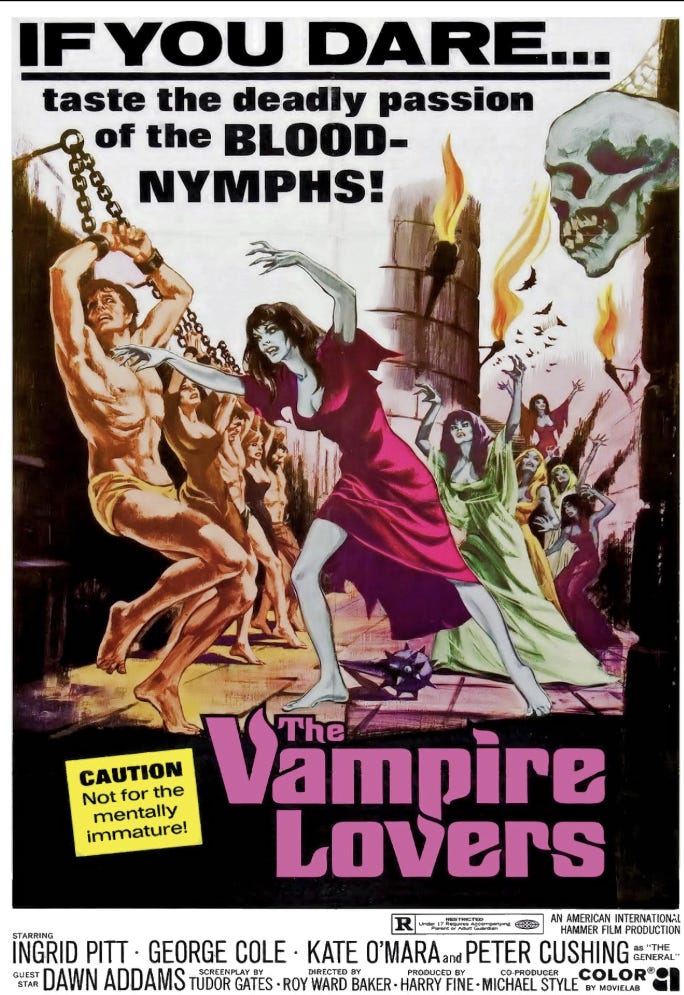
I hold to my share of ludicrous little affections. One is my fondness for the old Hammer horror films from the 1950s to the 1970s. Most involve Christopher Lee, Peter Cushing, or both, chewing scenery amid spun sugar cobwebs, cheap sets, and a bevy of actresses perhaps selected more for gameness, charm and pulchritude rather than any singular Thespian attainments.

Hammer movies are earnest and plodding, a little hokey even, and almost glacial in terms of pacing and editing; but the gravitas of the leads make them come to spooky, gore-bespattered life. And the life--the blood is the life, I hear--they bring is a weird, pre-modern central Europe by way of swinging 60s London. And one of the favorite Hammer subjects was Vampires. Lee’s Dracula--who went on the cinematic rampage no less than seven times--was emblematic of the genre.
One of the set pieces of these films introduces today’s superstition--the ability of Garlic to purify, protect, and to ward, particularly against Vampires and Strigoi--a nasty sort of witch/evil spirit. The other sovereign uses of garlic, namely to make one’s food delicious and breath regrettable, I will pass over.
Pretty much all vampire movies have a scene where the wise doctor festoons the sickroom of the afflicted with garlic flowers. Typically, these work for a time, but are inevitably removed by some type of subterfuge. Either the foolish mother finds their smell cloying, or the proud and loyal manservant is turned by a dalliance with some undead hottie, or the patient is restless, and opens the door to go outside. The vampire, if confronted with Garlic, hisses and blanches the way my dad did when I tried to introduce him to Ethiopian food. Garlic is present in Bram Stoker’s Dracula, Sheridan LaFanu’s Carmilla, and 90% of everything I cook. No wonder I have not been plagued by vampires overmuch. Nor conversational partners. Hmmmm....
In addition to using it to ward windows and bedchambers, travelers often carried it in their pockets to ward off attack.
Paste of garlic was rubbed on an infant’s heels, temples and chest to keep off witches. Placed into the mouth of a quiescent vampire, a clove of garlic would immobilize the creature for the wooden stake. The Greeks burned garlic on the theory that the fumes would prevent the undead from fully forming.
I am starting to suspect that the reason we think that so many of our superstitions come from Rome(or Greece by way of Rome) is because these guys were the by far the best record keepers of the ancient world, and this might be an example of them catching something older. Dioscorides and Pliny both remark upon Garlic’s purifying properties; by the 12th century, the Balkan portion of the Byzantine empire thought that purification effect extended to ‘revenants‘ and ‘unclean spirits’, the legend sort of grew from there. The Romans could have gotten it from anywhere...they were just the first folks who kept good enough notes to write it down. The Etruscans? The Thraco-Dacians? Who knows? People might have been stinking out evil spirits since before the bronze age collapse, for all we know; but no prior written record survives.
Tomorrow: I grow er...flush at the thought of tomorrow’s superstition...
t
Love this blend of camp cinema and folkloric archeology. The observation about Romans as meticulous record-keepers rather than originators of garlic's apotropaic properties is sharp, since most ancient beliefs survive only through whoever bothred to write them down. That note about Thraco-Dacian origins makes sense given how intensly localized vampire lore is to teh Balkans. Hammer movies might be hokey but they preserved sometihng.